A short pressure dip when a machine cycles does not automatically mean the plant needs a larger compressor. Storage, controls and distribution restrictions all affect what the machine receives. Start by distinguishing a brief demand event from a sustained shortage of production capacity.
A tank changes the time response
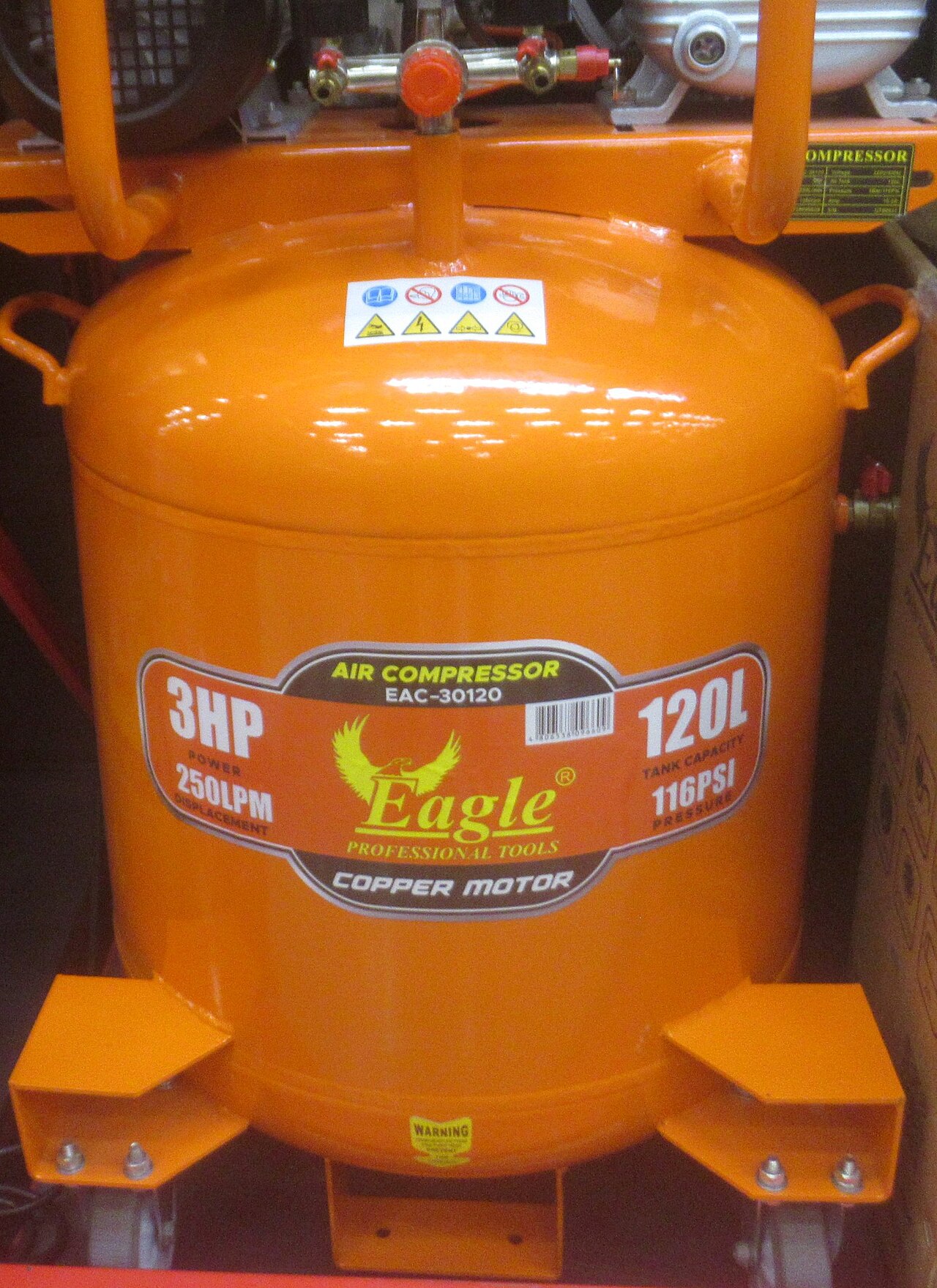
Atlas Copco describes the receiver as temporary storage between compressor output and changing demand. That stored air is useful only while pressure remains sufficient for the consuming process.
A larger usable storage volume can help bridge a short demand peak. It does not create air. If average consumption remains above the system’s sustainable supply, the available reserve eventually runs down. Recovery time between events matters as much as the size of an individual event.
Position determines what the tank can support
Kaeser’s storage guidance distinguishes wet storage, dry storage and storage near a user. These locations have different relationships to treatment equipment, moisture collection and local demand.
Draw the path from receiver to consuming machine. Include dryers, filters, regulators, valves and distribution lines. If a restrictive component sits after the receiver, additional upstream volume may not resolve a rapid local pressure collapse. Conversely, a local receiver requires a considered refill arrangement so its recharge does not simply move the disturbance elsewhere.
Measure the event, not just the lowest number
Collect a synchronized record of pressure near supply and at the affected user, together with the machine cycle and compressor operating state. Use a sampling rate that can resolve the event. A slow dashboard average may hide the pressure change that stops production.
The review should answer:
- How long does demand exceed the supply reaching the machine?
- Does pressure fall across a particular treatment or distribution component?
- Does the system recover before the next event?
- Are the compressor controls responding as intended?
These observations support sizing and location decisions without assuming every pressure problem has the same cause.
Include the vessel in maintenance planning
Receiver selection also involves pressure rating, condensate management, relief protection and the applicable inspection requirements. Use an appropriately supplied and installed pressure vessel; do not treat a storage-volume calculation as a complete installation design.
The final proposal should state the pressure band, demand event, location and recovery assumptions. That makes a storage recommendation testable and keeps it separate from a claim that the compressor has gained continuous flow capacity.