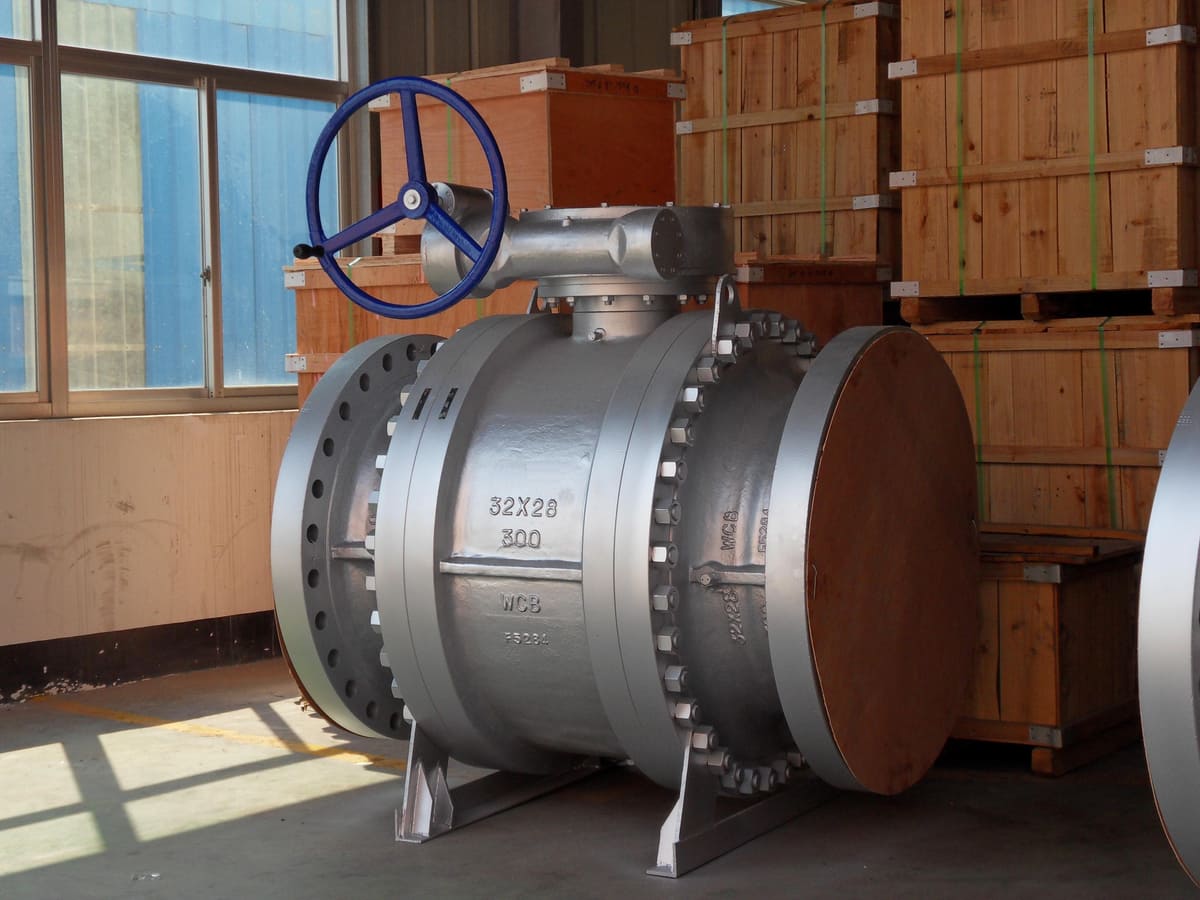
A request for a soft-seated or metal-seated ball valve is the beginning of a specification, not its completion. The selected seat has to work with the process fluid, solids, temperature and required shut-off performance of a particular valve configuration.
Describe the service before choosing the label
Emerson’s KTM Hindle Ultra-Seal documentation distinguishes PTFE seats for non-abrasive duty, carbon-seat options for certain clean services and metal-seat options for abrasive service. These are examples from a product family, not temperature or compatibility rules for every valve using a similar material name.
The same documentation describes coatings and spring-loaded arrangements as part of its metal-seat construction. That detail matters: the engineering choice includes the ball-and-seat pairing and loading arrangement, not simply a metal substituted for a polymer ring.
Carbon seats also show why a two-category comparison can be incomplete. Emerson offers a separate Gratite design with hard graphite seats for specified high-temperature applications. Its conditions and capabilities need to be checked as a distinct construction.
Turn shut-off language into a test requirement
A leakage claim needs a reference test and defined conditions. Ask which fluid, pressure, direction and acceptance criterion apply, and whether the stated result covers the ordered size and seat option.
The Ultra-Seal catalogue publishes different qualifications within its design range. It therefore provides a useful reminder not to assume that a general family description guarantees the same result for every size or configuration.
Likewise, distinguish leakage through the closed valve from leakage around the stem or body. A statement about one sealing boundary does not by itself describe the others.
A useful enquiry includes the operating envelope
Send the supplier the fluid composition, expected solids, normal and exceptional temperatures, differential pressures and intended operating function. Include the required direction of isolation and any known changes during a cycle.
Request a marked selection against that duty: seat construction, compatible pressure–temperature limits and applicable test evidence. Where actuated operation is required, ask for the torque requirements of the selected assembly rather than assuming the seat choice has no effect on actuation.
The aim is an identifiable valve configuration with traceable limits. A short material label can help organize options, but the complete service and shut-off specification determine whether one of those options is suitable.