In a direct rotary dryer, the direction of the process gas changes the thermal journey of the solids. The important comparison is where the hottest gas meets the material, particularly when the finished product has a temperature limit.
Start with the direction of contact
In co-current operation, gas and solids travel in the same direction. The hottest gas first encounters the wet feed. FEECO identifies this arrangement as useful for heat-sensitive products because the temperature exposure of the material can be managed without bringing the driest product into contact with the hottest incoming gas.
In counter-current operation, gas and solids move in opposing directions. The nearly dried material encounters hotter gas toward its exit. That can suit materials requiring more intensive heating, while making overheating of a sensitive product an important design concern.
These are descriptions of the contact pattern. They do not establish a universal product-temperature profile or operating setting for every material.
Compare product limits with the thermal opportunity
FEECO’s comparison discusses the efficiency potential of counter-current flow and the greater control challenges around solids temperature. It also identifies exhaust condensation as a condition that needs attention.
A useful enquiry should therefore state the maximum acceptable product temperature as well as the target outlet moisture. Include whether overheating changes the product’s color, handling behavior or other specified property. A dryer that removes the required water but fails the product specification has not met the process duty.
Flow direction is one design choice among several
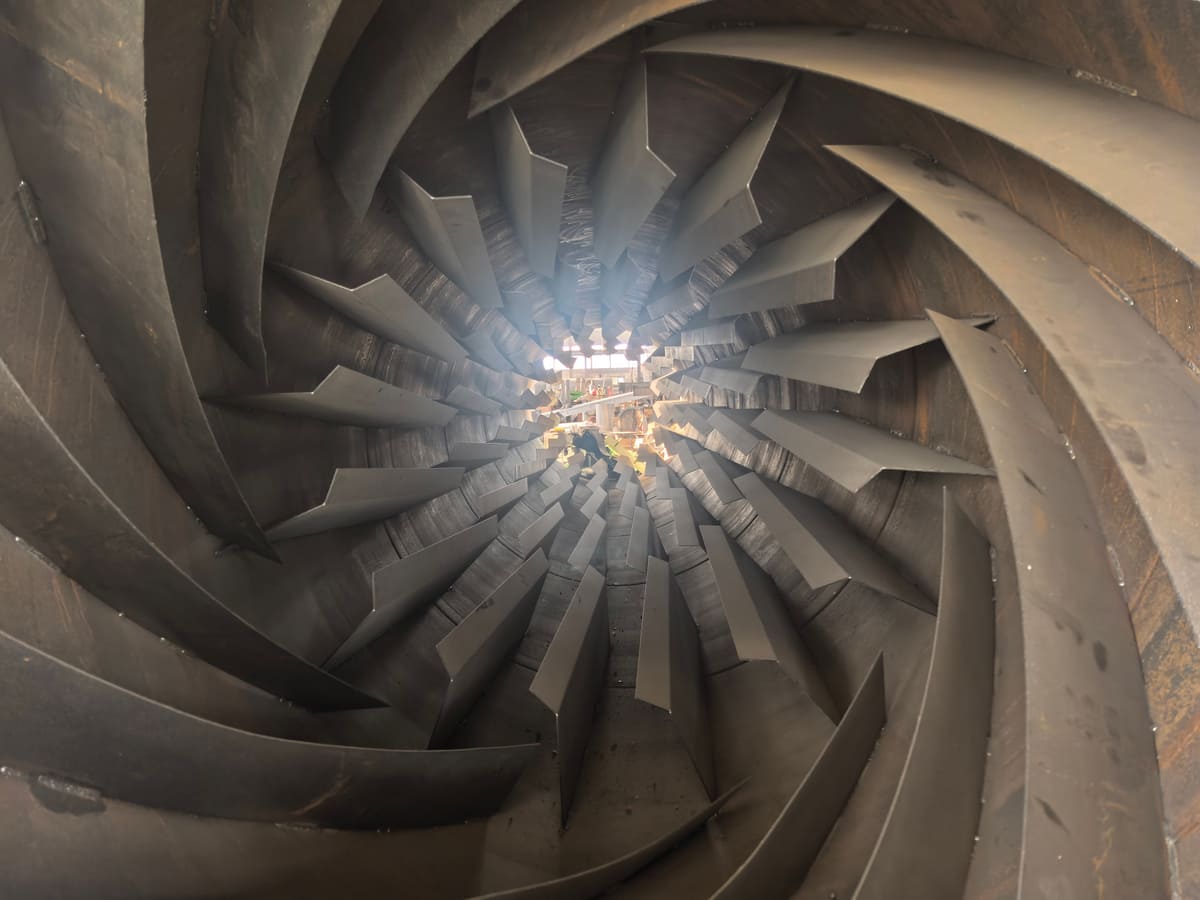
FEECO’s design guidance also considers the material and the type of heating arrangement. In direct dryers, lifting flights raise and shower solids through the gas stream, helping create the contact needed for heat transfer.
For a project review, identify the actual feed variation, required throughput and moisture-removal duty. Then ask how the selected flow arrangement, residence time and internals work together for that material. The photograph of internal lifting plates illustrates one of those physical components; it does not identify the gas-flow direction of a particular installation.
Material testing is a useful way to resolve an uncertain choice before fixing the plant configuration. Define what the trial must demonstrate: moisture outcome, temperature exposure and whether the dried material still meets its handling requirements. That produces a stronger selection basis than choosing the flow arrangement from an efficiency claim alone.
Further reading
FEECO — Co-current versus counter-current drying ↗