A cold room can record a defrost event and still return to cooling with ice left on its evaporator. The event log proves that a sequence started. It takes additional evidence to establish that ice was removed, water drained and useful airflow returned.
Separate the stages
A scheduled start establishes when defrost is allowed or requested. Termination decides when the heating or defrost phase ends. Drip time and fan control determine how the system returns to refrigeration. Those functions may be coordinated by one controller, but they answer different questions.
Copeland’s XM670K quick-start guide illustrates this distinction with separate control settings and defrost-end sensing. It also discusses termination-probe placement: a probe that warms too early can give an incomplete picture of the coldest, most heavily iced region. The settings and probe arrangement must match the installed equipment.
Read the coil and the room together
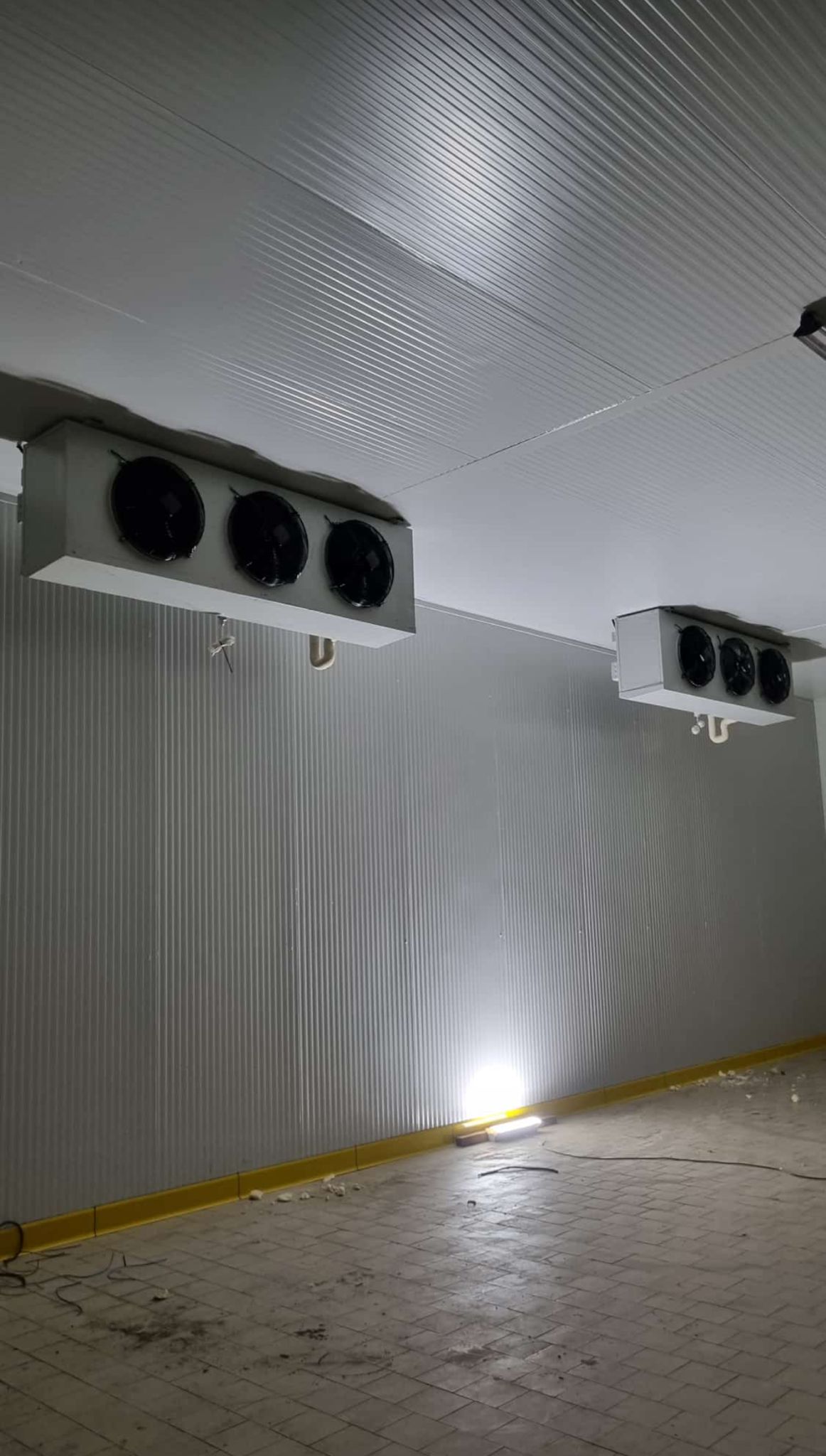
Danfoss’s troubleshooting guidance links icing problems to several possible causes, including defrost faults, drainage and moisture entry. Repeated ice formation should therefore prompt questions about door use and infiltration as well as the controller.
Use an observation sheet that records the same points before and after a cycle:
- Where does ice remain, and is its location consistent?
- Does water leave the drain path, or collect and refreeze?
- When do fans restart relative to the end of defrost?
- Does airflow recover, and how does room temperature recover afterward?
Carry out observations from safe access points. Physical inspection, heater work and probe changes belong within the site’s isolation and maintenance procedures.
Adjust from evidence
Simply adding more cycles may consume additional energy while leaving a damaged drain heater, poorly located probe or unusually high moisture load unresolved. Equally, shortening defrost to reduce temperature disturbance can leave residual ice that affects the next cooling period.
Before changing a setting, document the installed controller, defrost method, current sequence and equipment-maker limits. Ask the refrigeration technician to identify which observation the proposed change should improve. Afterward, compare equivalent operating periods, including door activity and product loading.
The acceptance record should describe the recovered coil and room performance. A timestamp saying that defrost ran is only the beginning of that record.