A smooth test plate and a production workpiece can behave very differently on the same vacuum gripper. Selection needs two connected checks: whether the arrangement can resist the intended loads, and whether the system can establish and maintain the required vacuum on the real surface.
Start with the complete movement
Pressure difference and effective suction area provide the basic holding-force relationship. A handling application adds orientation, acceleration and the way forces act on the cups. Lateral movement also makes the surface interaction important.
Schmalz’s calculation guidance evaluates different load cases and identifies the most demanding case as the design basis. It also makes surface condition part of the assessment. A catalog force should therefore not be read directly as an approved payload for every movement.
A force calculation does not close a leak
A porous panel, textured package or imperfect seal can continuously admit air. The vacuum source must handle that leakage while reaching the required operating condition. Festo’s vacuum documentation discusses the importance of the workpiece and the connection between cup and surface.
Test representative production variation: surface finish, dust, oil, curvature and the edges that may break a seal. Include the tubing and valves proposed for the real machine. A bench test with a short hose can conceal an evacuation-time problem in a longer installed circuit.
| Check | Evidence to request |
|---|---|
| Load resistance | The complete movement and worst operating load case |
| Vacuum establishment | Time to the required threshold with the installed circuit |
| Leakage tolerance | Performance on representative workpieces, including variation |
| Loss of supply | The machine’s approved response and load-retention assessment |
Avoid treating deeper vacuum as the default fix
Schmalz’s energy discussion explains that the energy needed to generate vacuum can rise disproportionately as the vacuum level increases. For porous materials, source flow and effective gripping area may be more relevant than pursuing the deepest possible vacuum.
Ask the supplier to compare the proposed arrangement at the required cycle time and workpiece conditions. Include sensing, release behavior and the response to an incomplete grip. Do not assign one generic safety factor or one pressure setting to every application.
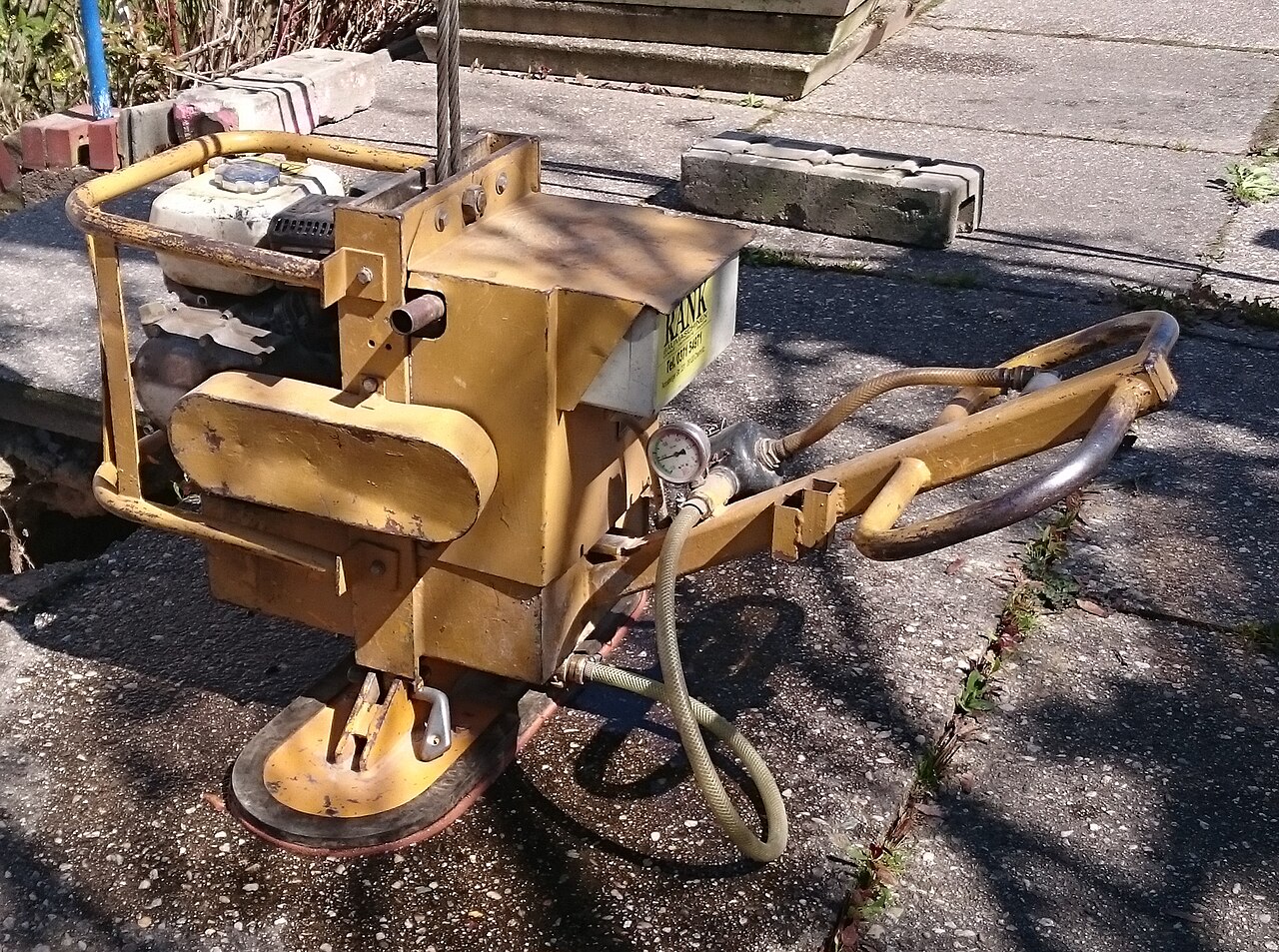
The photograph shows equipment intended for large paving slabs. It is a reference example of vacuum handling, rather than evidence that a particular cup, load or motion has been validated for another machine.
Further reading
Schmalz - Theoretical holding force of a suction cup ↗