A bearing that becomes noisy again soon after replacement may need more than another lubrication review. Electrical discharge is one possible damage mechanism, particularly where an electric drive creates a current path through the rolling contacts.
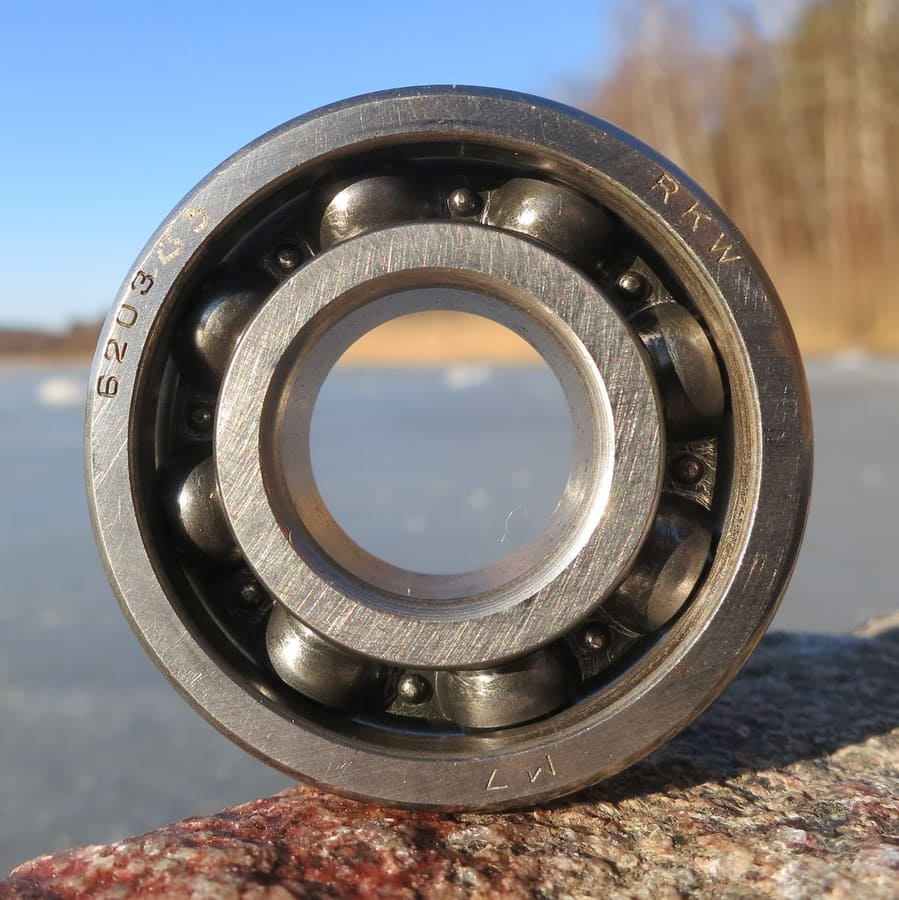
The reference photograph shows a standard bearing, not a sample of electrical damage.
What the surface can reveal
NSK’s damage guidance describes localized melting when current crosses the thin lubricant film between rolling elements and raceways. Small craters can develop into the groove-like pattern commonly called fluting.
That mechanism is different from simply finding a worn bearing. Surface appearance is evidence to preserve, not a complete diagnosis by itself. Photograph the raceways and rolling elements, retain the removed parts and record which bearing position failed. Ask a competent bearing specialist to assess the damage alongside lubrication and mechanical conditions.
Follow the circuit, not only the replacement part
In its discussion of electric-vehicle drivetrains, NSK identifies inverter-related currents and explains that current can take different paths through a motor. That application illustrates an important diagnostic principle: the position of a bearing within the electrical system matters.
For an equipment review, assemble a record of the drive arrangement, motor and bearing configuration, grounding provisions and recent changes. This gives the motor and drive specialists a common starting point. It is more useful than specifying an insulated replacement solely because the failed component was noisy.
Insulation and conduction solve different problems
NSK describes both insulating measures and controlled conduction as established approaches. Their suitability depends on the current mechanism and bearing position. A hybrid bearing with ceramic rolling elements and an electrically insulated ring are also different constructions; they should not be treated as interchangeable descriptions.
Before accepting a proposed measure, ask the supplier to explain which path it interrupts or provides, how it fits the complete motor arrangement and what evidence will demonstrate improvement. Electrical measurements and interventions belong with qualified personnel and the relevant equipment procedures.
Following repair, retain the original operating observations as a baseline. Track noise, vibration and the condition of subsequent removed parts. A successful replacement should be supported by an explanation of the original failure mechanism, rather than a sequence of unexplained bearing changes.
Further reading
NSK — Electrical erosion: damage conditions and countermeasures ↗
NSK — Inverter-related bearing currents and prevention approaches ↗