Choosing filter cloth means matching the slurry, the filtration target and the press—not simply picking a fabric by material or pore size. The right specification balances solids retention and liquid flow with cake release, cleanability, chemical and temperature resistance, and the mechanical demands of the equipment.
Start with the filtration goal
Decide what the process needs most: clear filtrate, a drier or more easily discharged cake, or a practical balance between them. The priority affects the cloth’s pore structure and surface characteristics. A cloth that retains finer particles may restrict flow, while a more open fabric may allow some solids to pass.
The cloth is only one part of the filtration system. Cake moisture, throughput and cycle time also depend on the slurry, cake resistance, pressure, equipment condition and operating cycle. Treat cloth selection as a way to support the target—not as a guarantee of a particular result. Element Mining and Construction
Assess the slurry
Gather information about the material being filtered before comparing cloths:
- Particle size and distribution: If pores are too large, particles may pass through. If they are too small, the cloth can blind and restrict flow. A mix of coarse and fine particles can behave differently from a more uniform slurry. The cloth needs to retain solids while allowing a cake to form and liquid to pass. Micronics
- Particle shape and abrasiveness: Sharp, fibrous or abrasive particles can wear or damage cloth differently. Consider fabric strength and durability as well as particle retention. M.W. Watermark
- Chemistry and temperature: Check the slurry’s pH, chemicals and operating temperature against the specific cloth material and grade. A general material description is not a substitute for verifying compatibility with the actual process conditions. Element Mining and Construction
- Cake behavior: Note whether the cake releases cleanly or is sticky, slimy or difficult to discharge. Cake behavior can influence the value of a smoother cloth surface or a fabric that is easier to clean. M.W. Watermark
- Cake load and cycle frequency: Thick or heavy cakes place greater mechanical demands on the cloth, while frequent cycles increase repeated wear. M.W. Watermark
Match fabric construction to the duty
Material, yarn construction, weave and finishing all affect cloth behavior. Treat the following as starting points to discuss with a supplier, not universal prescriptions:
| Cloth feature | Potential selection consideration |
|---|---|
| Polypropylene | Often considered where chemical resistance and economy are priorities. Confirm compatibility with the actual chemicals and operating temperature. |
| Polyester | May be considered where higher temperature tolerance is needed, but check chemical compatibility for the process. |
| Nylon | Offers strength and abrasion resistance, but chemical compatibility must be verified. |
| Monofilament yarn | Its smooth surface can support cake release and cleanability. |
| Multifilament or staple-fiber yarn | Can support particle capture, but may be more prone to clogging or blinding, depending on the application. |
| Plain weave | A tighter pore structure may help with particle retention. |
| Twill weave | May be considered where durability is important, including abrasive duties. |
| Satin weave | Its smoother surface may aid cake release. |
These comparisons are drawn from the selection guidance published by M.W. Watermark. The best choice still depends on the slurry, the target filtrate and cake, and the press.
Check the press and its operating conditions
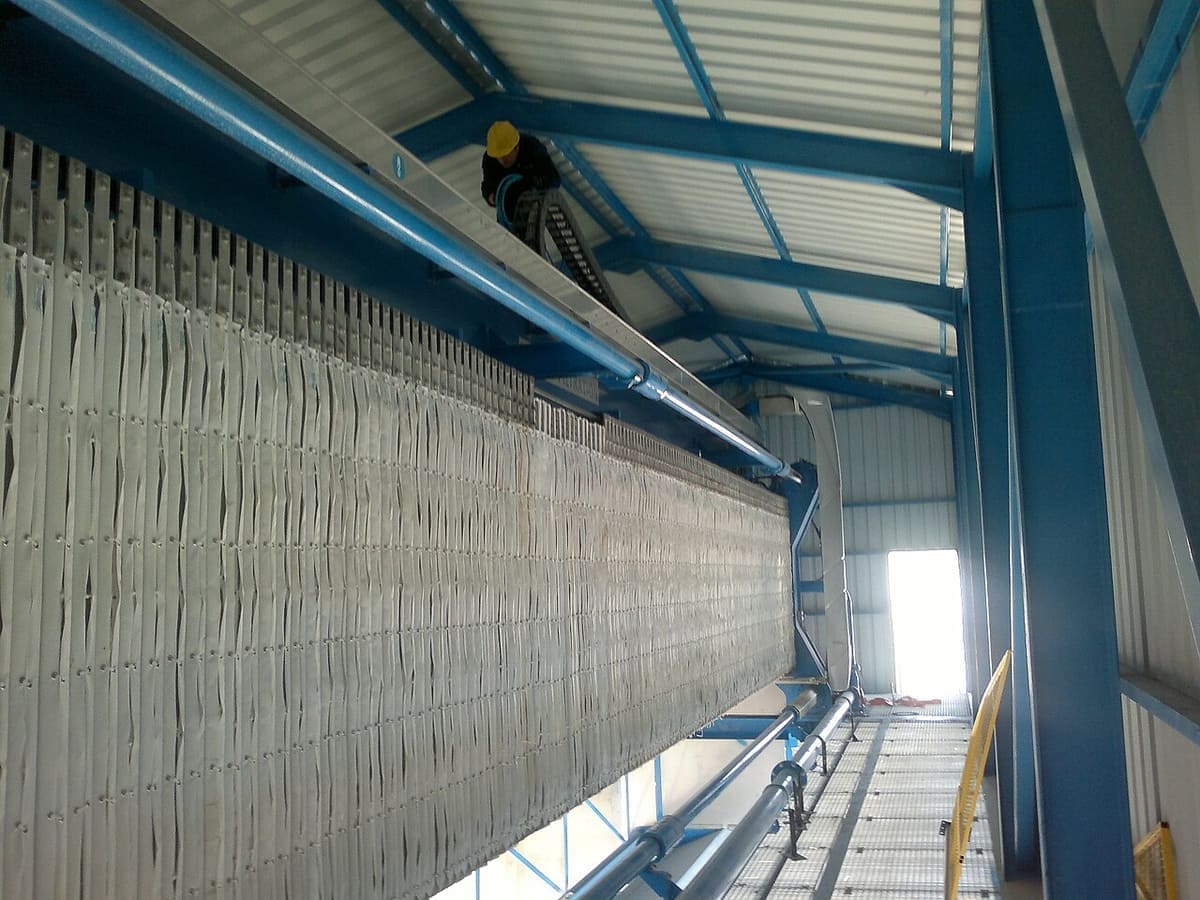
A cloth that works in one machine may not suit another. Press design and cloth attachment affect stretching, flexing, abrasion and other mechanical stresses. Confirm that the proposed cloth matches the equipment’s dimensions and attachment method, and consider the installed cleaning method and any scraper blades or cake-release tools. Spray bars, backflushing and mechanical scraping can impose additional wear. Micronics M.W. Watermark
When requesting a recommendation or replacement, provide the press model and cloth specifications, along with the slurry and operating details. For moving-cloth systems, equipment-specific features such as tracking, edges and joints may also matter; confirm these against the machine rather than assuming a standard cloth will fit. Element Mining and Construction
A practical selection sequence
- Set the process priorities. State the required filtrate quality and the cake characteristics that matter, including release and dryness.
- Describe the slurry. Provide available information on particle size and distribution, particle shape, abrasiveness, chemistry, temperature and cake behavior.
- Describe the press. Identify the press type, cloth dimensions and attachment, operating conditions, cleaning method and use of scrapers.
- Compare construction options. Evaluate material, yarn, weave and finish as a combination; do not choose from a polymer name or a single fabric property alone.
- Validate critical duties. Where performance is especially important or uncertain, confirm the choice through laboratory or plant testing. Element Mining and Construction
If performance changes, investigate the whole process
Longer cycles, changed filtrate quality, persistent blinding, uneven cake formation or worsening cake release are reasons to inspect the cloth. None of these symptoms proves that the cloth is the cause. Also review changes to the slurry, feed conditions, pressure, cleaning performance and equipment condition. Element Mining and Construction
A sound specification therefore connects three things: what the slurry is like, what the filtration process must achieve, and what the filter press will do to the cloth during operation. That combination is a more reliable basis for selection than choosing by fabric material or a single performance figure alone.
Further reading
How to Select Proper Filter Cloths ↗