Two seal-support reservoirs can look similar while serving different duties. For a liquid-lubricated dual mechanical seal, the important distinction is the intended pressure relationship across the inboard seal and the support system’s role in managing leakage.
Follow the pressure relationship
In an unpressurized dual arrangement, the buffer fluid operates below seal-chamber pressure. Process leakage across the inboard seal can enter the space between the seals and must be handled by the intended support and monitoring arrangement.
In a pressurized dual arrangement, barrier-fluid pressure is maintained above seal-chamber pressure. That relationship is intended to keep process fluid from entering the space between the seals during normal operation; barrier fluid can instead pass toward the process across the inboard seal.
EagleBurgmann’s application guide distinguishes these arrangements through its piping-plan descriptions. The names describe a designed system, rather than interchangeable liquids to put in the same pot.
Map the zones before changing the fluid
John Crane describes the inboard, buffer/barrier and outboard environments separately. The support equipment must work with the seal in its actual process conditions. A reservoir label by itself does not establish compatibility or the required operating relationship.
For a replacement-fluid review, bring the seal supplier the process fluid, operating range and approved support-plan drawing. Ask it to confirm fluid compatibility, lubrication and thermal requirements, the acceptable consequences of leakage, and the monitoring needed for the arrangement.
Use trends to frame the investigation
| Observation to record | Context needed before interpreting it |
|---|---|
| A changing reservoir level | Operating state, refill history and the intended leakage path |
| Changing support pressure | Seal-chamber pressure and the specified pressure relationship |
| Rising support-fluid temperature | Operating load, circulation and cooling conditions |
| An alarm or repeated refill | Instrument condition and the approved response procedure |
An individual reading is not enough to identify a failed seal face. Compare it with the operating state and previous trends before drawing a conclusion.
Do not convert a buffer arrangement into a barrier arrangement by adding pressure without an engineering review. Seal design, vessel rating, piping and instrumentation must suit the intended configuration. Use the maker’s limits and the applicable project specification for actual settings.
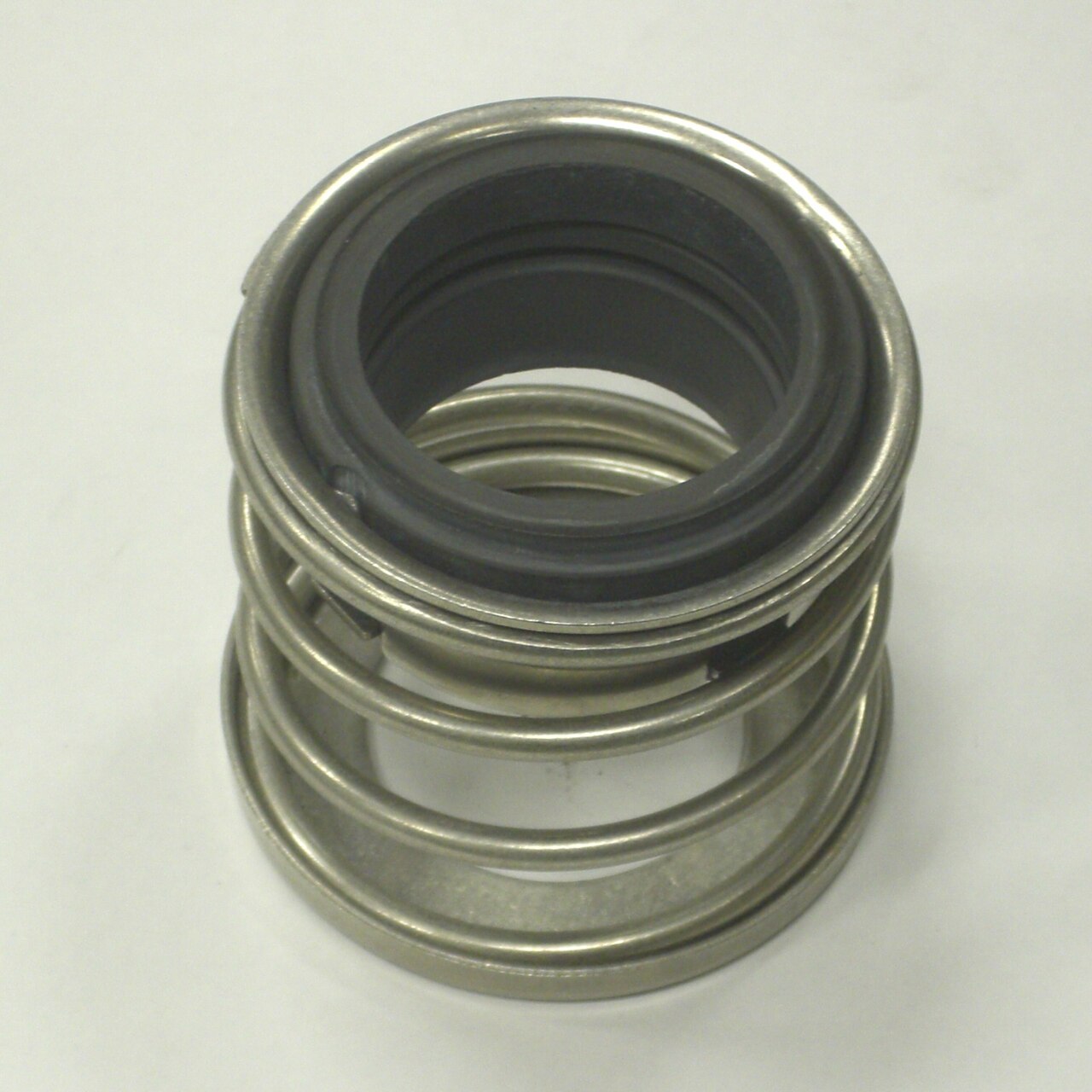
The photograph shows a mechanical-seal component. It does not depict a complete dual-seal assembly or a particular piping plan.
Further reading
EagleBurgmann - API 682 application guide ↗
John Crane - Mechanical-seal environments and support systems ↗