A flange connection can pass its initial check and still leak after repeated heating and cooling. The investigation needs to consider how the gasket and the bolted joint behave over time, rather than treating the material’s maximum temperature as a complete selection rule.
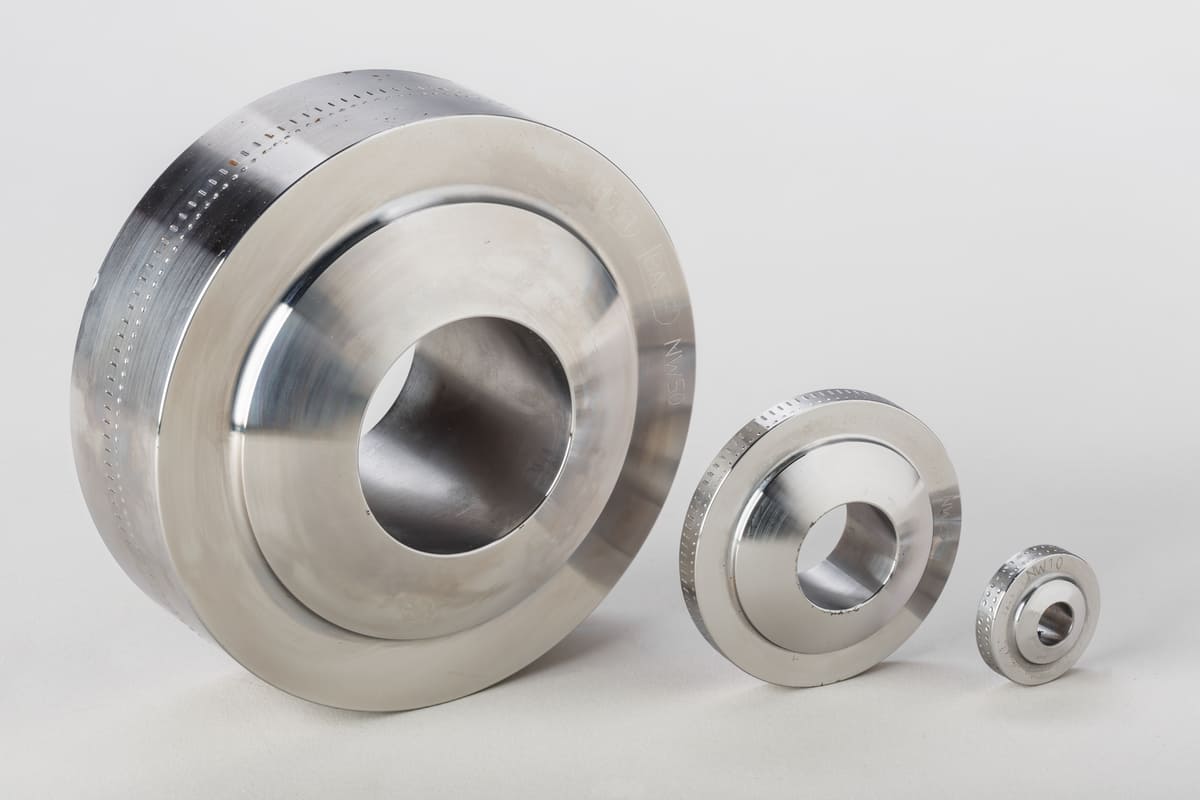
The photograph shows metal lens-ring gaskets. The material data discussed here must be matched to the actual gasket construction.
Seating and sustained sealing are separate questions
Some conformability is needed for a gasket to seat against the mating surfaces. That does not establish how much load the joint will retain in service. Garlock’s technical manual distinguishes compressibility and recovery from creep-relaxation behavior under sustained loading.
Garlock’s explanation of sealing data also separates a short-duration maximum temperature from a continuous service limit. A selection made from the largest number on a data sheet can miss that distinction.
Investigate the whole joint
Creep relaxation can reduce effective bolt loading. Garlock also notes that bolt elongation, flange distortion and vibration can contribute to torque loss. This makes a gasket-only explanation incomplete unless the rest of the joint has been considered.
For a failed connection, preserve the removed gasket and record its installed construction and thickness. Assemble the operating temperature history, fluid conditions, assembly procedure and evidence of flange damage or misalignment. Compare repeated failures at the same joint with changes in operating duty.
This record helps distinguish a selection problem from a joint or installation problem. It also provides useful information to the gasket and equipment suppliers before another material is chosen.
Read test results in their context
Laboratory relaxation and sealability figures are comparative evidence obtained under stated conditions. Ask for the test temperature, duration and compressive loading, together with the conditions under which the supplier considers those results applicable.
Chemical compatibility remains another selection requirement. A favorable relaxation result does not establish resistance to the process fluid, and a good room-temperature sealing result does not reproduce a plant’s thermal cycle.
The corrective action should identify the required material behavior and joint condition together. Use the joint manufacturer’s controlled assembly procedure; investigating a service leak is not a basis for improvising a live retightening operation. The aim is a connection that retains the necessary sealing load through its actual operating cycle.
Further reading
Garlock — How to interpret published sealing data ↗
Garlock — Gasketing technical manual: relaxation and joint loading ↗