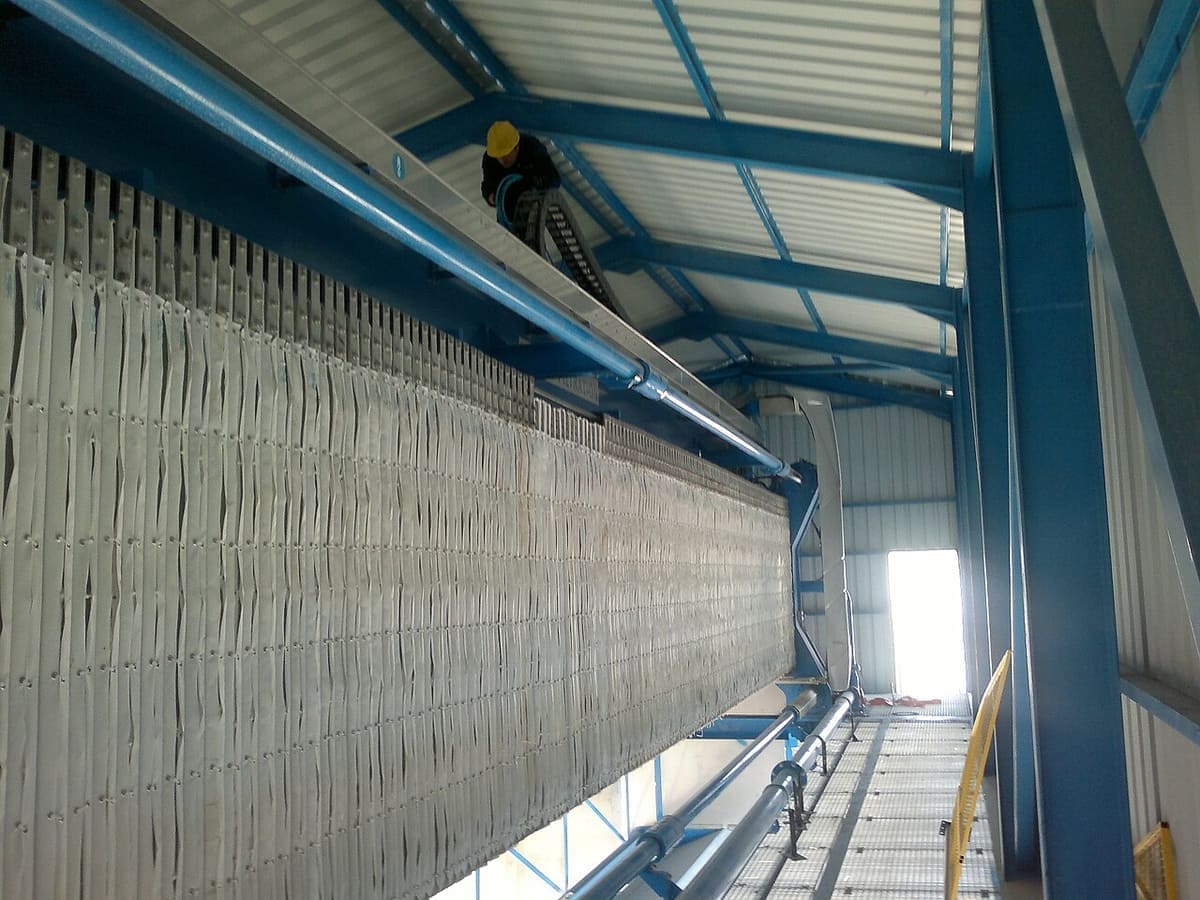
Inspect filter press plates for buildup, damage, blocked filtrate passages and sealing problems. These checks can help identify conditions that affect filtration or cause leaks; whether a plate can be repaired depends on the damage and the plate design. Follow the press manufacturer’s instructions when deciding on maintenance or replacement.
What to inspect
Before inspecting, stop the press and follow the site’s and equipment manufacturer’s safe-isolation procedures. Clean plates enough to make their surfaces and features visible. Deposits on plate surfaces can interfere with sealing and operation, and buildup on the lower parts of plates should not be overlooked. M.W. Watermark recommends cleaning plates thoroughly on all sides. Source
Check the following areas:
- Sealing edges and surfaces: Look for cracks, chips, distortion, embedded solids or other damage that could prevent plates from sealing evenly. Buildup on sealing surfaces can contribute to slurry leakage. Micronics
- Plate web and drainage features: Inspect the web for visible damage and clear solids from the drainage pips. Blocked drainage features can restrict filtrate flow across the plate. Micronics
- Filtrate passages and ports: Check discharge holes, channels and corner ports for deposits or blockage. These passages collect and carry filtrate out of the plate stack. Micronics
- Stay bosses: Look for cracks or damage, particularly at their bases, and remove accumulated solids. Micronics advises replacing plates with damaged stay bosses. Micronics
- Plate shape and condition: Check for cracks, warping, breakage and excessive wear. These are signs that a plate may no longer be suitable for service. Micronics
- Cloth and gasket condition: Inspect the cloth for holes and the gasket for damage. A hole in the cloth can allow abrasive material to wear the plate around its discharge eyes. M.W. Watermark
- Membrane-plate features, if fitted: Inspect fixed membrane plate hinge points for cracking. Check that replaceable membranes are seated fully in their grooves and look for damage, cracking or deterioration. Micronics
Use tools and cleaning methods suitable for the plate and press. Micronics recommends non-metallic scrapers for removing cake from sealing surfaces and describes pressure-washing plates during cloth changeouts. Its specific cleaning recommendations should not be treated as universal settings: confirm the permitted method and pressure for your equipment with its manufacturer. Micronics
What symptoms may point to plate problems?
Visible slurry leakage, uneven cake formation or reduced filtration performance can warrant an inspection of the plates and their surrounding components. Leaks may come from damaged plates or worn seals, but leakage is not conclusive evidence of a failed plate: M.W. Watermark notes that a small amount may be normal for some plate types, while dripping from a caulked, gasketed, recessed chamber (CGR) plate may indicate a need for repair. M.W. Watermark
Also check whether cloths are clogged or damaged and whether deposits are preventing plates from closing or sealing correctly. These conditions can produce symptoms that appear to be plate failures. Roxia
When to clean, repair or replace
Clean the plate when deposits are blocking drainage features, ports or sealing surfaces and there is no visible structural damage. Remove buildup using methods approved for the press and plate material.
Investigate or arrange repair when the plate leaks, a gasket is worn, or the cause of a sealing problem is unclear. Check plate type and inspect the cloth, gasket and sealing surfaces before concluding that the plate itself needs replacement. Persistent leakage or uncertain damage calls for guidance from the equipment manufacturer or a qualified service provider.
Replace the plate if it is cracked, warped or broken, or if its stay boss is damaged. Micronics also says a cracked or damaged fixed membrane plate must be replaced. Do not assume structural damage can be repaired without approval for the specific plate design. Micronics
If a plate must be removed, confirm the replacement and the correct plate arrangement with the press manufacturer. Micronics cautions that removing plates without replacement shortens the stack; if the hydraulic cylinder cannot clamp the shortened stack correctly, leakage can occur. Its article also notes that plate sequencing and removal in pairs can matter for post-filtration steps. Micronics
Keep inspection findings useful
Record the plate location, observed damage, leakage and any cleaning or corrective work. Comparing findings across inspections can help operators spot recurring buildup or damage and decide when to seek technical advice. Set inspection and cleaning frequency according to operating conditions and the equipment manufacturer’s guidance; the supplied sources do not establish one interval suitable for every press.
Further reading
Inspection and Maintenance of Filter Press - Roxia ↗
Evaluating Worn or Damaged Filter Plates: M.W. Watermark ↗
What are the signs your filter press needs maintenance? - Roxia ↗
The Most Common Reasons Filter Presses Go Down - ChemREADY ↗
May Maintenance Tip: Focus on Filter Plate Maintenance - Micronics ↗