A dehumidifying dryer can display a satisfactory dew point while the material entering a molding process still misses its moisture requirement. The display describes the air at a measurement point. It does not directly establish the moisture content of every pellet leaving the hopper.
Review four connected conditions
Novatec’s resin-drying guide explains drying through heat, air dew point, time and airflow. For a hygroscopic material, those conditions work together; a strong result in one does not automatically compensate for a deficiency in another.
Use the resin supplier’s requirements for the exact grade. Do not apply the same drying temperature or time to every polymer, and distinguish the specified material condition from the dryer’s operating setpoint.
Check the path through the hopper
Conair’s troubleshooting guidance emphasizes the temperature of air entering the hopper, adequate residence time and airflow through the material. It also identifies material-moisture analysis near the hopper outlet or process as the way to check the actual drying result.
Record the resin throughput and usable material inventory along with the operating conditions. A change in production demand can alter the time material spends in the hopper even when the dryer display remains unchanged. Identify where each air measurement is taken and whether it represents the condition reaching the material.
| Observation | Question it helps answer |
|---|---|
| Air temperature at the relevant inlet | Is the material receiving the intended thermal condition? |
| Airflow and distribution | Is heat and moisture transport reaching the material bed? |
| Material throughput and residence | Is sufficient treatment time available? |
| Properly sampled material moisture | Does the resin meet the required processing condition? |
Investigate a process defect without assuming its cause
Conair also notes that some suspected drying problems come from other processing conditions, and that excessive thermal exposure can damage material. Raising temperature or extending time without a documented reason may therefore create another problem.
Agree the sampling, handling and measurement method with the material or equipment specialist. Keep samples representative and avoid re-exposure that changes the result before measurement. Compare the measured moisture with the grade-specific requirement, then investigate the drying conditions if it is outside the accepted range.
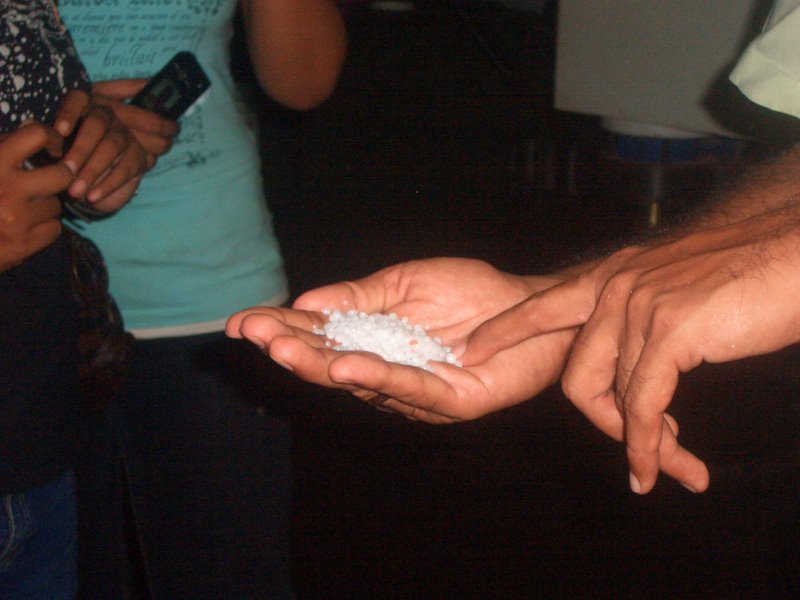
The cover shows generic plastic granules. Their polymer grade and moisture condition are not established by the photograph; the article concerns the verification method for the actual material being processed.
Further reading
Novatec - Resin drying basics ↗
Conair - W600–5000 dryer manual, poor-material-drying troubleshooting ↗