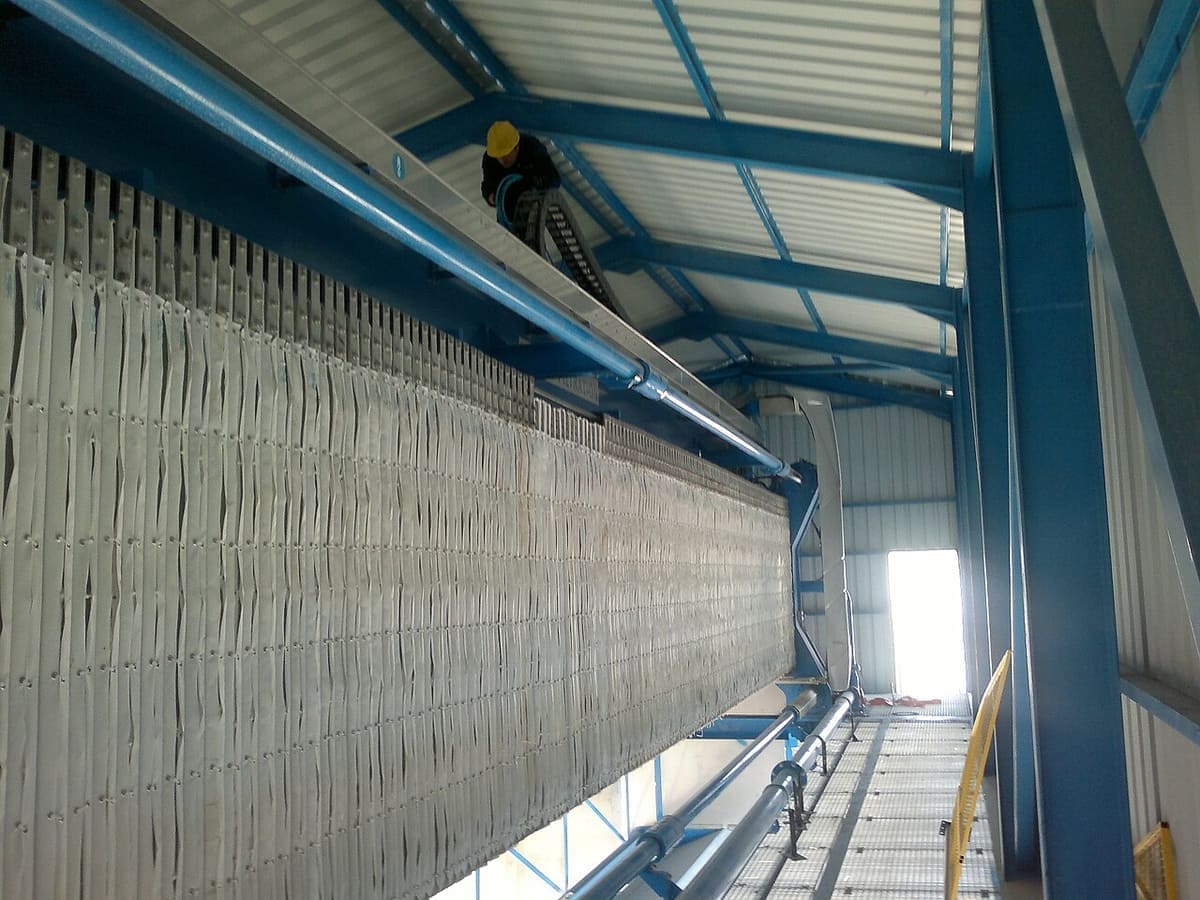
Choose a filter press feed pump for the whole filtration cycle, not just the initial fill. Match its flow and pressure capability to the slurry, press design and piping, then check that it can deliver the required feed as resistance rises and flow falls.
Start with the slurry and process
Before comparing pump types, collect operating data for the actual slurry. Properties that affect pump selection and filtration include:
- Solids concentration and particle characteristics: These influence how the slurry moves and how cake builds in the press.
- Viscosity and temperature: Both can affect the flow the pump can deliver.
- Abrasiveness and chemical compatibility: Abrasive solids can accelerate wear; corrosive or extreme-pH fluids may require compatible wetted materials.
- Shear sensitivity or large solids: These can rule out some pump designs or change the preferred operating method.
These factors also affect filtration performance, so pump selection should be coordinated with the press and process requirements. The feed-pump selection discussion from Fluid Control Equipments identifies solids concentration, viscosity and temperature as relevant, and recommends pilot trials for better flow-rate estimates.
Size for the press cycle, not a single flow point
A filter press typically has two distinct operating conditions:
- Filling: The chambers need to fill with slurry. This phase generally calls for relatively high flow at lower pressure.
- Filtration and cake formation: As solids accumulate, resistance rises. Flow falls while the pump must continue to provide the pressure required by the press and process.
This change in operating conditions is described in North Ridge Pumps’ filter press feed pump guide. A pump selected only for a high initial fill rate may not suit the later, higher-resistance part of the cycle.
For a first estimate of filling flow, use:
Required filling flow = slurry volume to be fed ÷ target filling time
Use consistent units—for example, cubic metres divided by hours gives cubic metres per hour. Base the volume on the press’s effective chamber capacity and the intended batch, rather than treating total press volume as automatically equal to slurry feed volume. The estimate is a starting point: filtration flow changes during the cycle, and slurry properties and available filtration area also affect throughput.
Record flow and discharge pressure over a representative cycle if the press is already operating. If reliable operating data are unavailable, pilot trials can help establish a realistic duty point.
Establish the pressure requirement
The pump must provide enough pressure at the required stage of the cycle to overcome resistance through the filter media, the developing cake and the feed piping, while staying within the press’s allowable operating limits. Include relevant piping losses and elevation changes when assessing the system; a flow estimate at the pump alone does not account for what reaches the press.
Use the press manufacturer’s operating limits and the process duty to set the required pressure. Do not treat a pressure figure from another installation as a universal target: allowable pressure depends on the equipment and application.
Provide appropriate pressure protection. This is especially important with positive-displacement pumps, which can continue to deliver flow as discharge resistance increases. The Fluid Control Equipments article recommends pressure-relief valves or pressure switches to prevent excessive pressure in the process line.
Match pump type to slurry and changing resistance
Positive-displacement pumps are often considered for filter presses because the press resistance rises during cake formation. The Fluid Control Equipments article recommends positive-displacement options for this type of duty and lists screw, air-operated diaphragm, vane, piston and gear pumps. That is a selection starting point, not a guarantee that every design will suit every slurry.
Other pump types may fit particular duties:
- Centrifugal pumps: May suit high-flow, lower-pressure service, such as initial filling, but check performance at the pressure required later in the cycle. North Ridge Pumps notes that centrifugal pumps may not provide the pressure needed for some press applications without additional measures.
- Diaphragm pumps: Can be considered for abrasive or viscous slurries, but check the pump’s solids-handling limits and maintenance requirements.
- Peristaltic pumps: May be worth evaluating where solids handling, containment or shear sensitivity matters; confirm that the required flow and pressure are within the selected model’s capabilities.
- Progressing-cavity, screw, vane, piston or gear pumps: Compare the specific pump’s duty range, material compatibility and maintenance needs against the slurry and cycle.
Pump categories have different capabilities, and supplier guidance can reflect particular product ranges. North Ridge Pumps, for example, discusses centrifugal, diaphragm, peristaltic and lobe pumps in its guide. Ask for performance information for the actual slurry and operating conditions rather than choosing by pump type alone.
Check controls, protection and installation
Confirm that the proposed pump can:
- Deliver the required filling flow and the pressure needed as resistance rises.
- Handle the slurry’s solids, viscosity, temperature and chemical conditions.
- Connect to the existing feed line and press.
- Be controlled through the cycle if flow needs to change as the press fills.
- Operate with suitable pressure protection and a clear response to a blocked or closed discharge.
Variable-speed control may help adjust flow as demand changes, but it does not replace pressure protection or verification against the pump’s operating limits. For a positive-displacement pump, confirm how excess pressure or flow will be managed before putting the system into service.
A practical selection sequence
- Record slurry composition, solids concentration, viscosity, temperature and any abrasive or corrosive properties.
- Confirm the press’s chamber volume, filtration area, allowable pressure and intended cycle.
- Estimate filling flow from the slurry volume and target fill time.
- Determine the required pressure at the press, accounting for cake and piping resistance.
- Compare suitable pump types and specific pump performance for both filling and later-cycle conditions.
- Confirm materials, connections, controls, maintenance needs and pressure protection.
- Validate the selection with operating data or pilot trials where uncertainty remains.
The right feed pump is the one that meets the process duty across the changing press cycle while remaining compatible with the slurry and protected against the system’s maximum pressure—not simply the pump with the highest stated flow rate.
Further reading
Selection of feed pumps for filter press ↗
Feed Pump Flow Rate for Filter Press: How to Calculate and Optimize It - Jingjin ↗